Strategic Timing: Selling Your Renewable Energy Business in 2026
Read why now is a good time to explore the sale of your renewable energy firm.

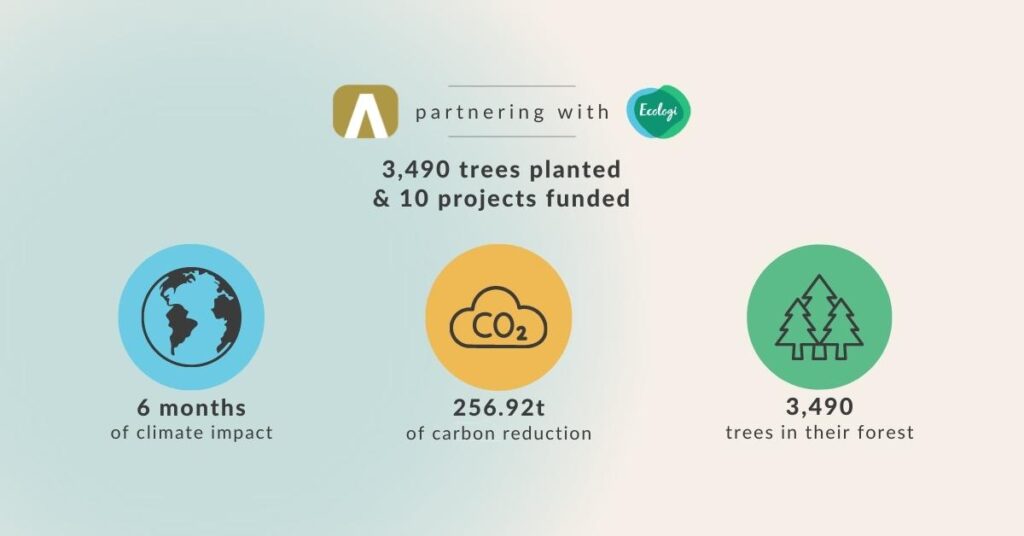
Altius Group is celebrating six months as a Climate Friendly Workforce in partnership with Ecologi. During this time, we have planted 3,490 trees and funded ten projects resulting in 256.92t of carbon reduction.
But what climate projects have we supported?
Egypt’s near-constant daily sunshine throughout the year creates the ideal conditions for solar power, with minimal rainfall and plenty of sunlight. With a population of over 106 million people and 100% access to electricity, there is a high demand for converting the sun’s energy into electricity via solar panels. However, more solar power stations are needed to sufficiently alter Egypt’s energy grid and shift away from fossil fuel-derived energy sources.
Over its ten-year lifespan, this project will prevent 779,450 tonnes of CO2e from entering our atmosphere. Benban Solar Park is a power complex of 41 solar panel plants that, when completed, will be the world’s largest solar photovoltaic (PV) park. The PV panel generates electricity by converting solar power, the most abundant renewable energy, into electric power, resulting in clean energy that does not require the use of fossil fuels and emits no greenhouse gases (GHGs). In recent years, Egypt has faced serious shortages of electricity due to insufficient and inconsistent supply, causing negative development impacts on the economy, as well as the activities of many households.
Ultimately, this project contributes to balancing the gap between supply and demand while increasing development opportunities as a result. To find out more about Generating Renewable Solar Electricity in Egypt, click here.
The Democratic Republic of Congo (DRC) is Africa’s second largest country, distinguished by lush natural rainforests and an abundance of biodiversity found nowhere else on the planet. The Congo basin rainforest, located in the heart of the Democratic Republic of the Congo, is the world’s second largest tropical rainforest. This rainforest not only provides vital habitat for the area’s wildlife, but it also serves as a critical carbon sink for the world, removing over 800 million tonnes of CO2e per year from our atmosphere between 2001 and 2021.
The tropical climate provides a hot and humid existence for the people, animals and plants that live there, making it heavily reliant on the Congo River as its main water source. The Congo River sustains the country’s abundant rainforests and is critical to the ecological balance of the African continent due to its vast expanse of tributaries.
DRC has lost 17.1 million hectares of tree cover over the last 22 years, an 8.6% decrease since 2000. Given that the future trend of deforestation in this region is likely to worsen, its protection and preservation are critical.
This project will protect 248,956 hectares of forest from industrial logging, fuel wood extraction, and slash-and-burn agriculture. Throughout the project’s 31-year lifespan, the project will be credited with reducing 5,671,613 tonnes of CO2e emissions per year, totalling over 175 million tonnes of avoided emissions.
You can find out more about Preventing Deforestation in the DRC here.
The Amazonian ecosystems of the Madre de Dios region are considered Peru’s ‘capital of biodiversity’, due to their impressive species richness. This project area alone provides habitat to four endangered rainforest tree species and eleven endangered wildlife species.
Unfortunately, deforestation in this area is on the rise, endangering biodiversity and releasing carbon dioxide into the atmosphere. According to the Peruvian Government’s annual forest loss report, rates in the Madre de Dios have been increasing since 2001, peaking in 2017 when this area had the second highest rate of forest loss in Peru.
The Madre de Dios Amazon REDD+ project is based on the impending effects of a new trans-Amazonian, inter-oceanic road from Brazil to the Pacific Ocean and Peruvian ports, which is nearly complete. The climate project has two main goals: to reduce the pressure from land conversion for agricultural and cattle ranching purposes and to ensure the long-term management of the two timber concessions in the area. It will ensure long-term forest conservation and sustainable management, promote healthy wildlife habitats, and prevent future depletion of forest carbon stocks. This area’s protection will prevent 659,793 tonnes of CO2e from entering the atmosphere each year.
This project will also contribute to the long-term development of indigenous communities in the surrounding area by providing alternative sources of income, increasing local employment opportunities, and providing technical training courses to young people in the community. More information surrounding the Peruvian protection of the Amazon can be found here.
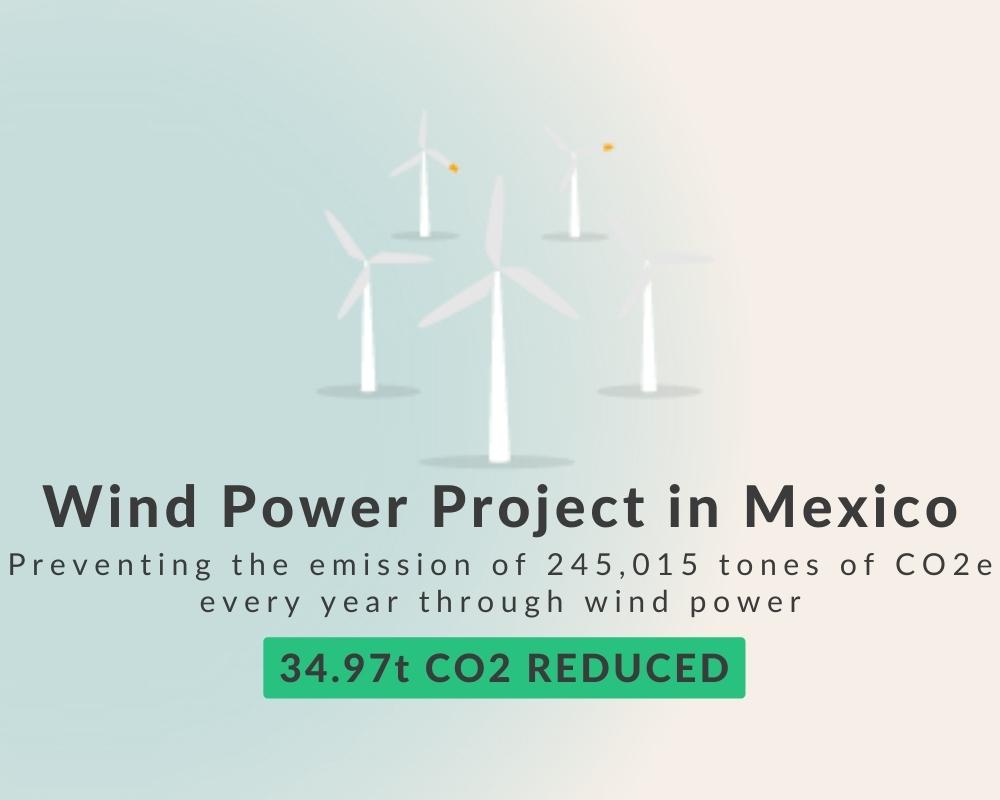
Mexico has significant wind power potential, with the zone of El Istmo de Tehuantepec alone capable of producing over 33,000MW. Despite this, Mexico produced only 0.13 percent of the world’s wind power in 2009, which amounted to 202MW. Wind power provided 6.36% of Mexico’s electricity supply in 2020, up from 0.24% in 2009. Increased capacity for producing energy from wind power is vital in Mexico’s transition away from fossil fuels, which still generate over 90% of Mexico’s energy.
This project will save at least 245,015 tonnes of CO2e per year it is operational, which will be for at least 20 years. The project is part of a larger wind project that includes two other wind turbine sites that generate clean energy for Mexico. In collaboration with local groups such as the Civil Association MEXFAM and the Espritu de Ayuda Foundation, the Technological Institute of Mixe, Istmo University, The National Educational University, and the Training and Productivity Institute for Work in Oaxaca State, the three projects have contributed to several areas of sustainable development in the local area.
Furthermore, the project has aided in the improvement of health care, education, local employment, and biodiversity.More information about Mexico’s Wind power project can be found here.
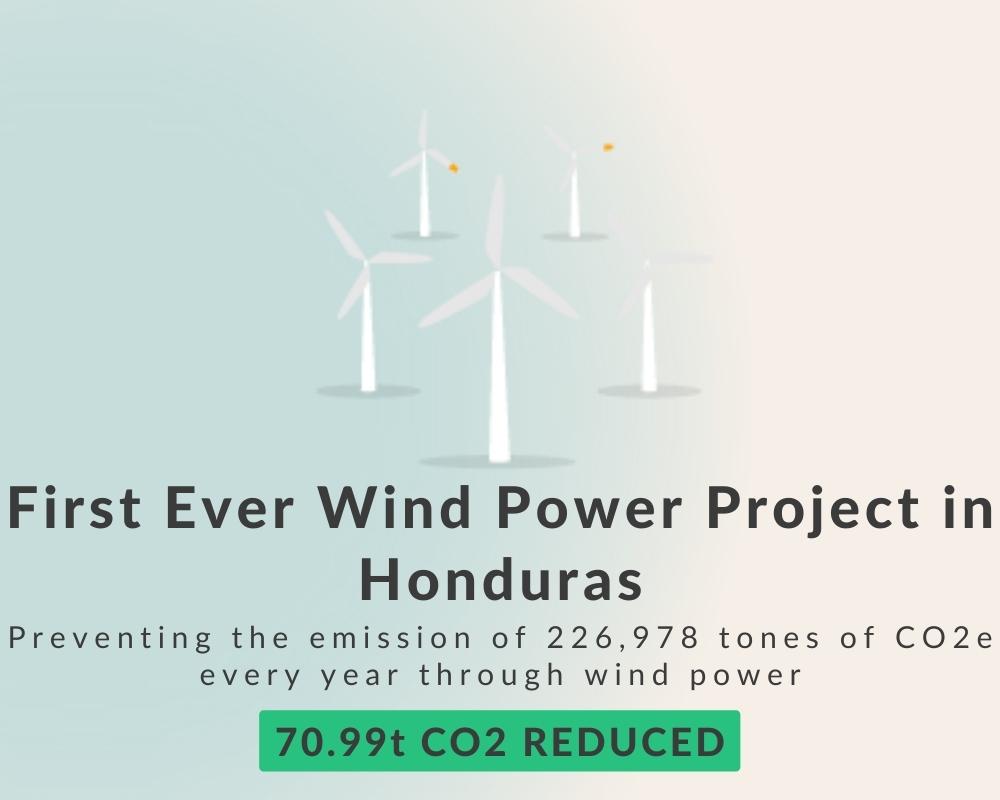
Honduras has a population of over 10 million people, and access to electricity has been slowly increasing since the beginning of the millennium, when only around 65% of the population was connected to the grid. Over the last 20 years, increased renewable energy generation has enabled more than 92% of the population to have access to electricity.
The rise in energy consumption is attributable to a variety of factors, including population growth, but also in part due to a shift in the types of industries people are now working in.
This project, which consists of 51 2MW wind turbines, will generate 345,970MWh of energy per year, which will be fed into Honduras’ National Interconnected System. The turbines began producing energy in 2011, and the project’s operational lifetime is estimated to be at least 20 years. Honduras hopes to produce 60% of its energy from renewable sources by 2022, and this initiative will help them get there.
Not only that, but 57,000 trees have also been planted around the project site while almost 500 local people were employed and now 32 people are employed full-time by the project which provides and stable income for the employees and their families. Furthermore, access to clean water for around 2,000 local people was improved by the project in 2014 when three water wells were drilled. To find out more about the First Ever Wind Power Project in Honduras, click here.
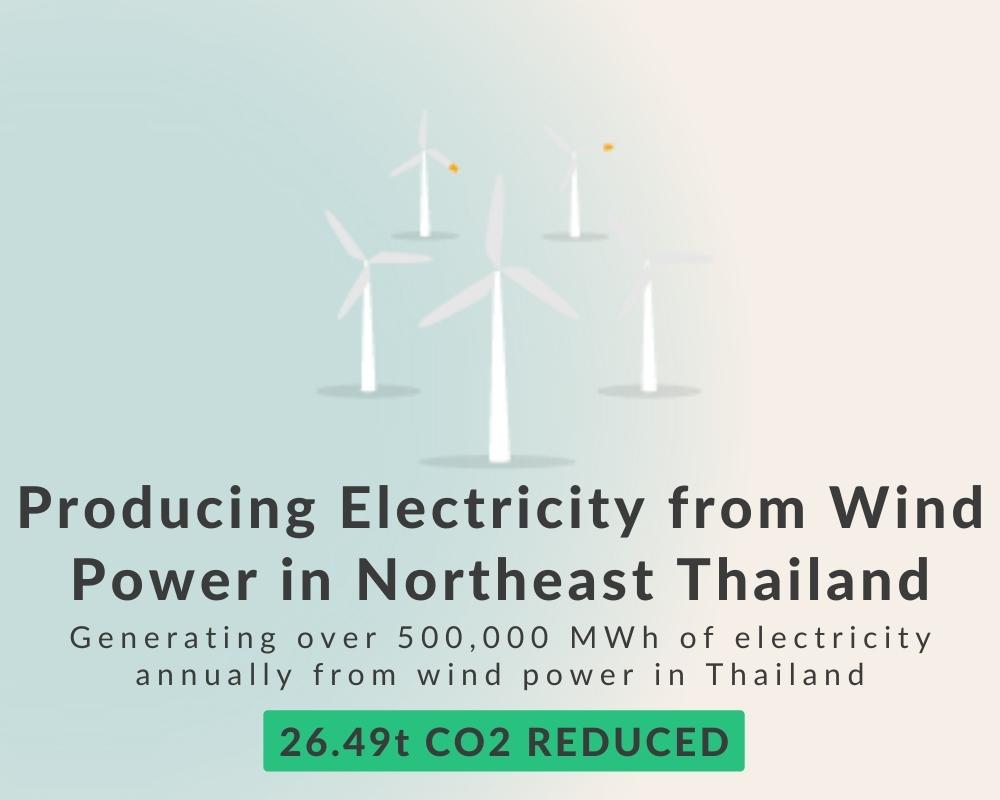
Thailand’s energy, like that of most other countries, has traditionally been generated by the burning of fossil fuels. However, when new policies to minimise greenhouse gas emissions were implemented, Thailand is producing more energy from renewable sources, such as wind power. Thailand’s energy demand is predicted to rise by 78% by 2036, necessitating an urgent increase in the quantity of energy Thailand can produce, with a growing proportion of this energy coming from renewable sources.
This wind power project bundles the West Huaybong 2 and West Huaybong 3 wind farms, which together will generate over 500,000 MWh of electricity every year and feed it into Thailand’s national grid. These two wind farms will save approximately 250,000 tonnes of CO2 per year by replacing electricity supplied by fossil fuel fired power plants with renewable electricity provided by wind power.
You can find out more about Producing Electricity from Wind Power in Northeast Thailand here.
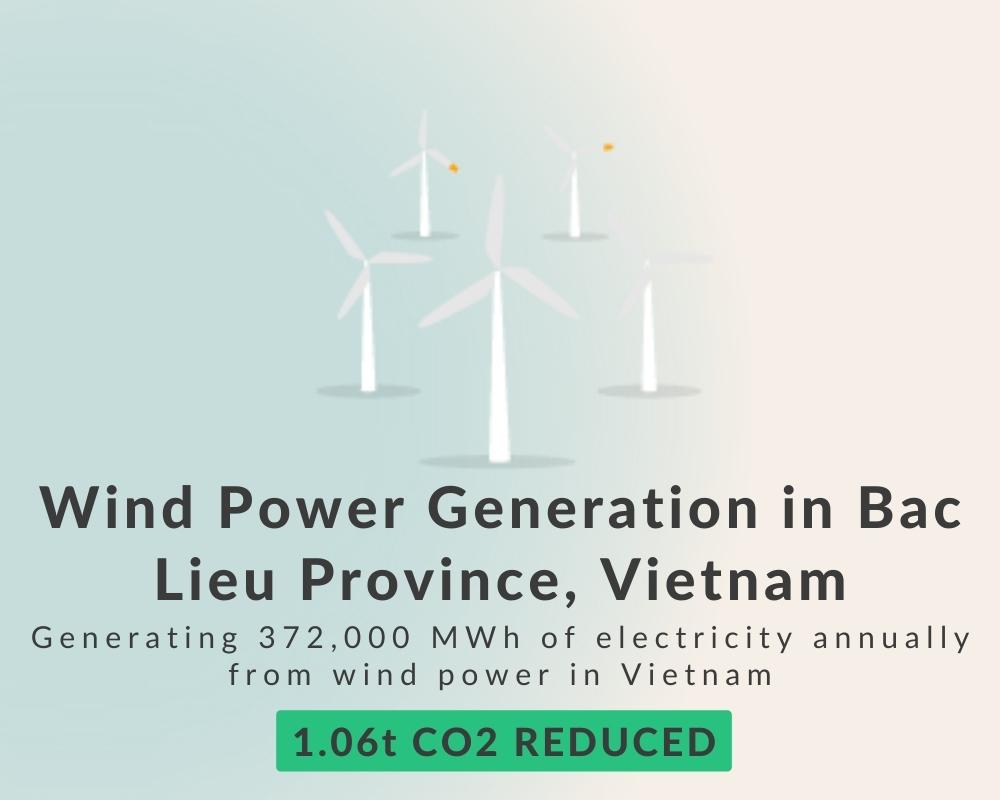
Demand for electricity in Vietnam has grown by an average of 10% each year over the past five years and continues to grow in line with Vietnam’s rapid economic growth. This is resulting in demand outstripping supply in many areas, leading to power shortages across the country. 26% of Vietnam’s energy is currently generated from hydroelectric plants, but droughts, heavy rains, and earthquakes can all interfere with this method of energy generation, leading to electricity shortages.
In 2020, over half of Vietnam’s electricity was generated from coal. To reduce its reliance on coal, Vietnam needs to increase its renewable energy generation capacity.
This project will generate 320,000 MWh of renewable electricity every year and feed it into Vietnam’s national grid, helping to bridge the gap between supply and demand that currently exists.
By replacing electricity generated from fossil fuel fired power plants with electricity generated using wind power, this project will prevent around 143,000 tonnes of CO2 from being emitted into the atmosphere every year.
More information surrounding Wind power Generation in Bac Lieu Province, Vietnam can be found here.
India possesses the world’s second-longest rail infrastructure and has pledged to electrifying all broad-gauge routes by 2023 and reaching net zero emissions by 2030. These initiatives have already begun, with 45, 881 kilometres of India’s railroad tracks electrified.
Delhi had around 18.6 million residents in 2016, making it the world’s sixth most populous city. To reduce greenhouse gas emissions per passenger-kilometre, the Mass Rapid Transit System (MRTS) was introduced, which included Metro Delhi, with the aim of making travelling around the city faster, cheaper, and more energy efficient, thereby reducing carbon emissions.
This project will result in a reduction in greenhouse gas emissions of 529,043 tCO2 per year on average. These reductions come from a combination of changes being made by this project, including reducing reliance on less efficient and more polluting forms of transport and increasing the efficiency of the metro and its related infrastructure. The source of the electricity that is required to power the metro is being shifted away from fossil fuels, with solar power projects being developed to supply electricity to the railway as it aims to be the world’s first 100% solar-powered metro.
More information about Improving the Efficiency of Metro Transport in India can be found here.
The percentage of India’s population with access to electricity has been rising steadily over the past few decades. In 1994, less than 50% of the population had access to electricity, but in 2019 this figure had increased to 97.815%. While access to electricity is almost universal across India, demand for electricity has more than doubled since 2000, largely due to India’s rapidly growing population. However, coal continues to be India’s primary source of electricity.
This small hydropower project is located in the lesser Himalayas, in the state of Himachal Pradesh in northern India. Water in the form of snowmelt and rain, as well as water from nearby springs, feeds the catchment area. This is a Run-of-River scheme, with two turbines placed in the river that are rotated by the flowing river water. The 2 turbines, each producing 2.4MW of energy will be rotated by the running water, generating 20,967MWh of electricity per year. The project will bring both skilled and unskilled jobs to the local area too, employing 13 local people and training one more.
This project will reduce greenhouse gas emissions by replacing electricity in the grid that would have been produced by burning fossil fuels. Every year, 17,614 tCO2e will be prevented from being emitted by this hydropower plant.
To find out more about Generating Clean Electricity from Hydropower in India, click here.
Energy production in Chile has been historically dominated by fossil fuels, with over 70% of total primary energy supplied by coal, oil or gas, despite the country’s relatively low fossil fuel resources.
In recent years, however, Chile has branched out into other energy sources, and has become known as a leader in renewable energy development – making great strides in geothermal, solar and wind energy, and other “Non-Conventional Renewable Energy (NCRE)” sources, as defined in Chilean law.
This project involves the production of electricity through the collection and processing of waste biomass from the Viñales sawmill in central Chile. The waste biomass is directly combusted in a boiler to generate steam, which is expanded through a turbine to generate electricity.
The biomass used to produce the electricity which is typically leftover from the sawmill’s industrial activity (such as sawdust or bark), with additional waste biomass supplied from forestry pruning operations nearby. In the absence of the project activity, this waste biomass would likely be burned in the open air or left in piles to decay.
The project activity is expected to reduce emissions by more than 250,000 tCO2e per year by generating electricity that would otherwise be produced by burning fossil fuels. You can find out more about Using Waste Biomass to Produce Electricity in Chile here.
Becoming a carbon friendly workforce has enabled us to fight climate change and change lives while initiating conversation between colleagues surrounding their personal carbon footprint and ongoing issues around the world. These everyday conversations could make a huge difference to the future of our planet.
You can find out more about Ecologi and why we decided to become a Climate Friendly Workforce here.
Our forest will continue to grow every month and can be viewed on our public sustainability profile. Do you wish to help contribute to the reversal of climate change and the restoration of our planet? Whether you are an individual or a business, you can visit Ecologi for more information.
Read why now is a good time to explore the sale of your renewable energy firm.
Altius Group, the Lancashire-headquartered business brokerage, has ranked 7th in the UK in the Experian MarketIQ M&A Review of 2025.